
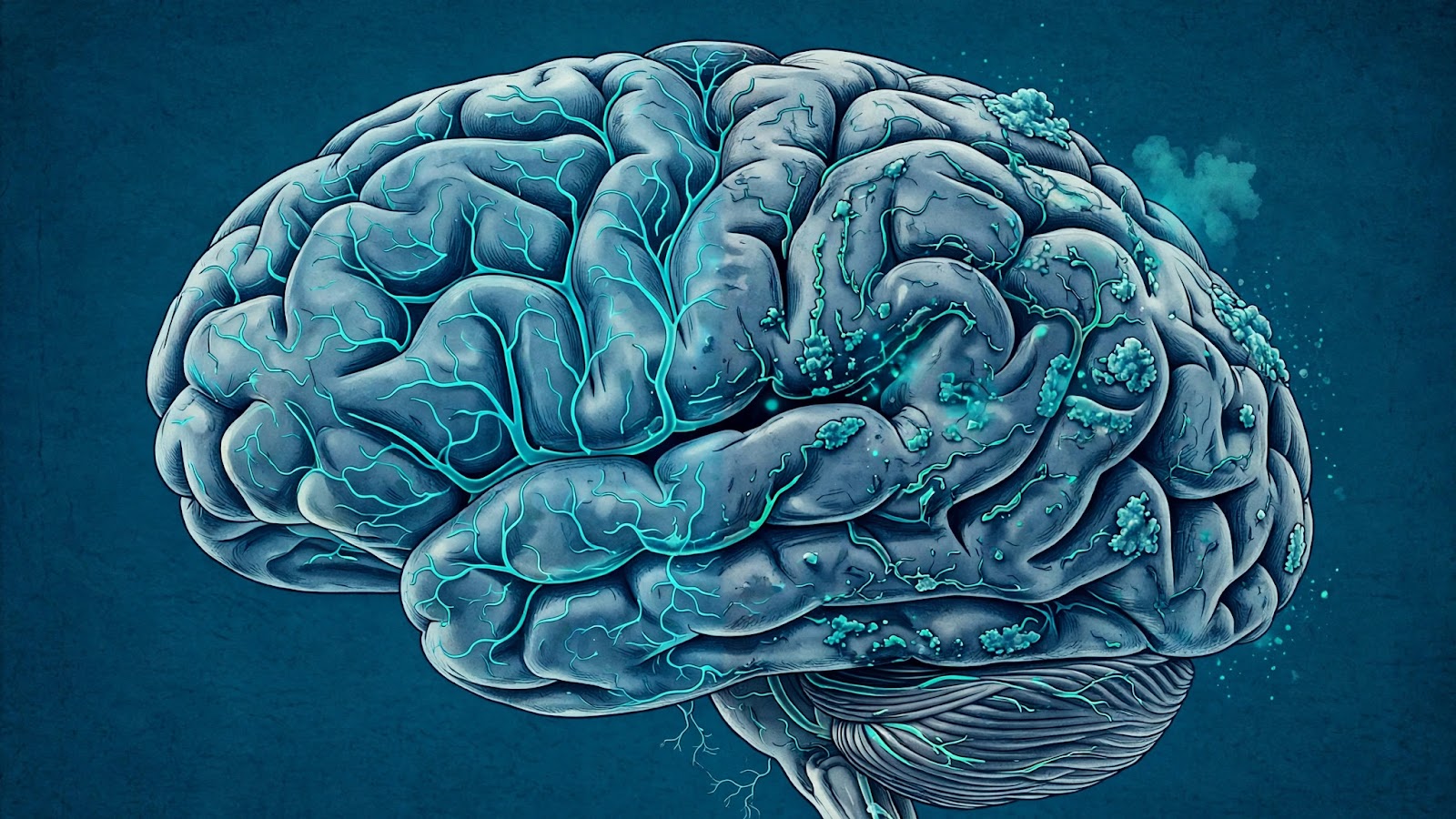
For decades, scientists have known that one gene raises a person's risk of Alzheimer's disease more than any other. It is called APOE4, and roughly one in four people carries at least one copy of it. Yet the gene has kept a stubborn secret: nobody could say exactly how it damages the brain.
Now a research breakthrough reported on October 5, 2026 via ScienceDaily has put a new piece of the puzzle into place — and it changes how scientists think about the disease. The findings suggest that APOE4 harms the brain's blood vessels, crippling the brain's ability to flush out toxic proteins. And perhaps most strikingly, experiments indicate this vessel damage may be reversible.
This article explains what the research found, why blood vessels matter so much in Alzheimer's, and what the discovery could mean for future science. It is informational only — not medical advice. If you are concerned about your own genetic risk, talk to a doctor or a genetic counselor.
What Is APOE4, and Why Does It Matter?
Everyone carries the APOE gene, which comes in three common variants: APOE2, APOE3, and APOE4. These variants help the body move fats and cholesterol around, including inside the brain. The variant a person inherits depends on the versions passed down from each parent.
APOE3 is the most common and is considered neutral for Alzheimer's risk. APOE2 appears slightly protective. APOE4, however, is the strongest known genetic risk factor for late-onset Alzheimer's disease — the common form that usually appears after age 65. People with one copy of APOE4 have roughly three to four times the average risk; those with two copies can have ten or more times the risk.
But "risk factor" is not the same as destiny. Many people who carry APOE4 never develop Alzheimer's, and many people without it do.
The Blood Vessel Connection: A New Angle on an Old Gene
Most Alzheimer's research has focused on two hallmarks of the disease: sticky clumps of amyloid-beta protein that build up between brain cells, and tangled fibers of tau protein that form inside them. APOE4 was thought to influence this process mainly by affecting how amyloid is produced or cleared.
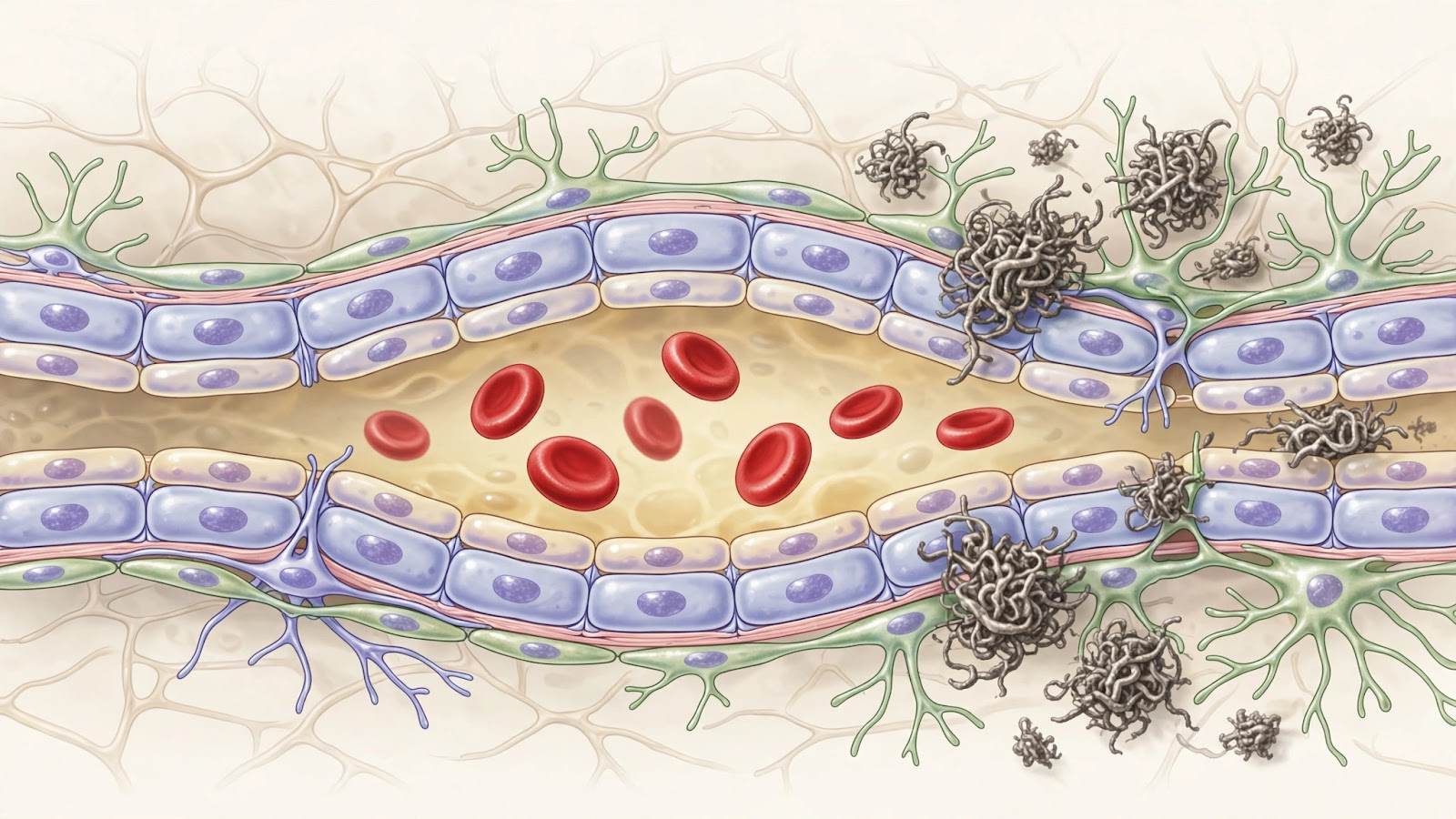
The new research points the spotlight somewhere else: the brain's vast network of blood vessels. The human brain contains roughly 400 miles of tiny vessels. They do far more than deliver oxygen and nutrients. They are also part of the brain's waste-removal system, helping to drain away toxic proteins — including amyloid-beta — before they can accumulate.
According to the findings reported in early October 2026, APOE4 appears to damage these vessels. When the vessels are weakened or leaky, the brain's clearance system falters, and toxic proteins that should be washed out instead pile up. In other words, APOE4 may raise Alzheimer's risk not only by acting on the brain's neurons directly, but by breaking the plumbing that keeps the brain clean.
This matters because vascular problems are among the most common findings in Alzheimer's patients, and the new research helps explain why the two so often travel together — with the APOE4 gene sitting at the intersection.
How Researchers Uncovered the Damage
Scientists studied experimental models carrying the human APOE4 gene and compared their brain blood vessels with those of models carrying the neutral APOE3 variant. The differences were clear. Vessels in the APOE4 models showed signs of injury: their walls were compromised, and the barrier that normally keeps harmful substances in the blood from leaking into brain tissue was weakened.
That barrier — called the blood-brain barrier — is one of the brain's most important defenses. When it breaks down, inflammation rises and the delicate environment that neurons need to function is disrupted. The research showed that this breakdown tracked closely with impaired clearance of amyloid-beta, linking vessel damage to the protein buildup that defines Alzheimer's.
Crucially, the team also found that the damage did not look permanent. In experimental models, interventions targeting the vessel injury appeared to restore vessel function — and with the vessels working again, protein clearance improved. That reversibility is what makes the finding a potential turning point: it suggests a window in which treatment could repair the damage rather than merely slow an unstoppable decline.
Why "Reversible" Is the Word Everyone Is Watching
In Alzheimer's research, the word "reversible" carries enormous weight. Treatments have aimed mostly at slowing the disease or clearing amyloid after it has already accumulated.
If vessel damage is both an early driver of the disease and fixable, the strategy changes. Instead of waiting for toxic proteins to build up and then trying to remove them, future therapies might shore up the brain's blood vessels early — keeping the clearance system running so the proteins never accumulate in the first place.
Scientists are careful to note that results in experimental models do not automatically translate to people. Still, the research gives drug developers a concrete new target — the brain's vasculature — and a reason to test vessel-protecting approaches in APOE4 carriers before symptoms appear.
What This Means for the Amyloid Story
The new findings do not overturn the amyloid hypothesis — the idea that amyloid-beta buildup drives Alzheimer's — but they reshape it. Rather than amyloid accumulating simply because the brain makes too much of it, the research suggests that in APOE4 carriers, the brain may also fail to remove enough of it.
Think of it like a bathtub. Alzheimer's researchers have spent years debating whether the tub overflows because the faucet runs too fast or because the drain is clogged. This study points at the drain. If APOE4 clogs the brain's drainage by damaging its vessels, then protecting the drain becomes just as important as turning down the faucet.
This drainage view also connects Alzheimer's to broader vascular health. The same factors that damage blood vessels throughout the body — high blood pressure, diabetes, smoking, poor diet — may hit the brain's vessels especially hard in APOE4 carriers. That is one reason researchers continue to study how everyday heart-healthy habits relate to long-term brain health, a topic explored in guides such as The Complete Guide to Healthy Eating: 12 Science-Backed Rules.
Who Carries APOE4 — And Should You Get Tested?
About 25 percent of people carry one copy of APOE4, and roughly 2 to 3 percent carry two copies. Because the gene is common, researchers stress that carrying it is not a diagnosis and does not mean Alzheimer's is inevitable. Many carriers live long, cognitively healthy lives.
Genetic testing for APOE4 is available through doctors and some direct-to-consumer services, but experts advise thinking carefully before testing. A result can bring anxiety without offering a clear medical action to take, since there are currently no approved treatments that specifically target APOE4. That is exactly why many specialists recommend discussing testing with a doctor or genetic counselor first — they can explain what the results can and cannot tell you, and help you decide whether testing makes sense for you.
It is also worth noting that Alzheimer's risk is shaped by far more than one gene. Age remains the biggest risk factor. Cardiovascular health, physical activity, sleep quality, education, and social engagement all appear to influence risk. Researchers are increasingly convinced that protecting the brain means protecting the whole body — including its blood vessels.
The Bigger Picture: Brain Health Is Vascular Health
One of the most practical takeaways from this line of research is how tightly brain health is tied to vascular health. The brain's blood vessels are not passive pipes; they actively regulate what enters the brain and clear what should leave.
People with high blood pressure in midlife face higher dementia risk later — a connection discussed in tips for maintaining mental health and heart health through blood pressure control. Poor sleep also appears to impair the brain's nightly waste-clearance processes, which is one more reason sleep scientists emphasize consistent, sufficient rest, as covered in The Science of Sleep Debt.
None of these habits can change a person's genes. But if APOE4's danger works partly through fragile blood vessels, then keeping those vessels as healthy as possible becomes a sensible, science-aligned goal for everyone — carriers and non-carriers alike.
What Comes Next in the Research
The immediate next steps are clear. Researchers will need to confirm that the vessel damage seen in experimental models also occurs in people who carry APOE4, and that repairing vessels in humans improves protein clearance. Brain imaging techniques that can visualize the blood-brain barrier in living people are improving quickly, which should make such studies possible.
Drug developers now have a new target to aim at. Therapies that strengthen vessel walls, calm vessel inflammation, or restore barrier function could one day be tested in APOE4 carriers years before any memory symptoms appear. If the damage is truly reversible in people as it appears to be in models, early intervention could delay or even prevent the cascade that leads to Alzheimer's.
Longer term, the findings may also reshape how clinical trials are designed. Future trials might select participants based on APOE4 status and vessel health, and measure success not only by amyloid levels but by how well the brain's clearance systems are working.

The Bottom Line
The October 2026 research adds a vital chapter to the APOE4 story. The strongest known genetic risk factor for Alzheimer's appears to damage the brain's blood vessels, undermining the cleanup systems that keep toxic proteins from accumulating — and experimental evidence suggests that damage can be undone.
There is still a long road from laboratory models to human treatments, and no one should interpret these findings as a reason to seek unproven therapies or to panic about their genes. But for a field that has spent decades searching for the earliest, most treatable roots of Alzheimer's, a reversible cause is exactly the kind of lead scientists have been hoping for.
If you have questions about your own genetic risk, the right step is a conversation with a doctor or genetic counselor — not a search engine. And for everyone else, the message of this research doubles as timeless advice: take care of your blood vessels, and you are taking care of your brain.