
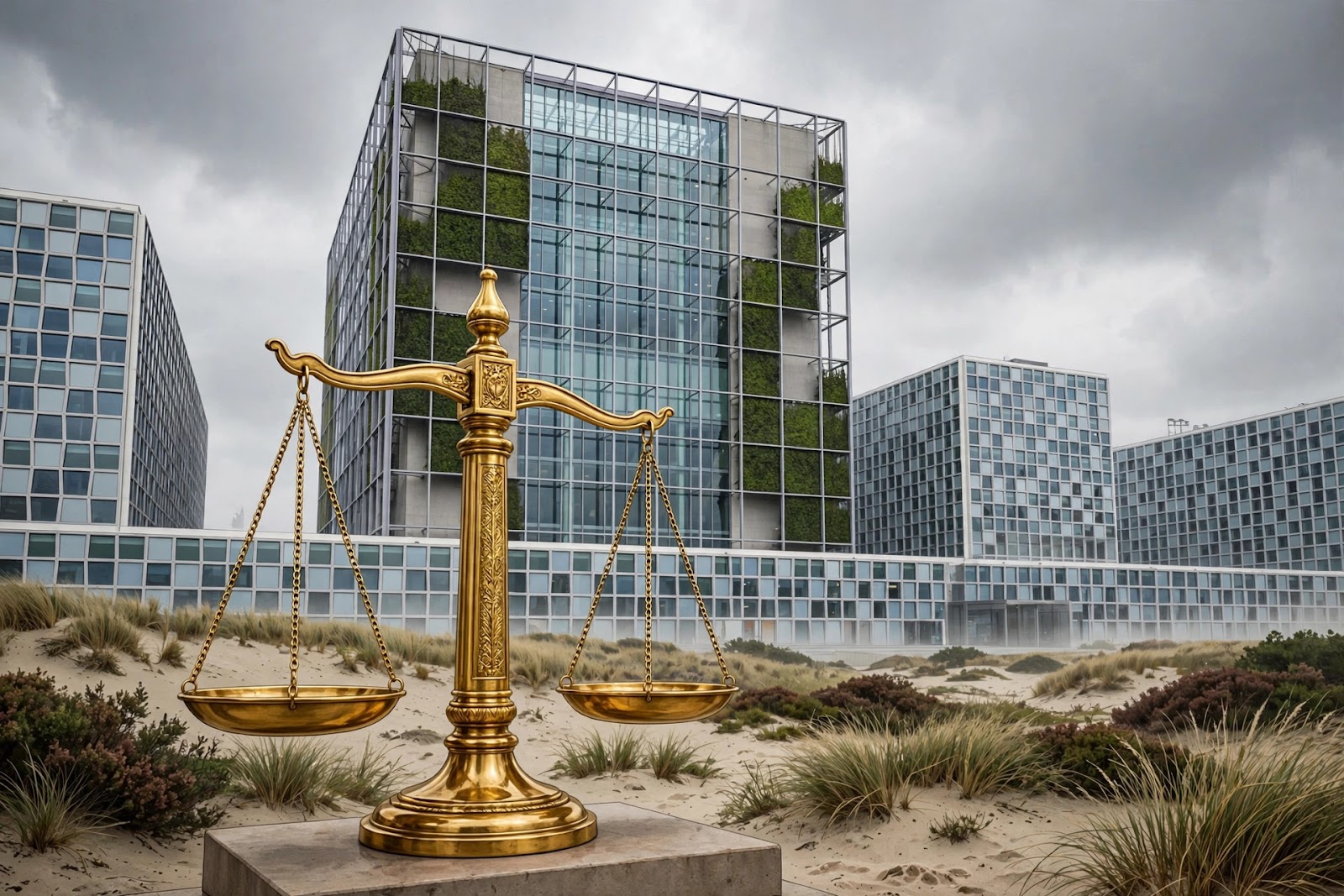
The Ruling: Trial Chamber III Clears the Last Hurdle
The International Criminal Court has ruled that former Philippine president Rodrigo Duterte is fit to stand trial on charges of crimes against humanity arising from his government's bloody war on drugs. In a press release issued on October 8, 2026, the court announced that Trial Chamber III had made public its decision — dated September 28, 2026 — finding that the 81-year-old former leader is able to effectively exercise his fair-trial rights and can therefore stand trial.
The ruling removes the last major procedural obstacle before the trial, which is scheduled to open in The Hague on November 30, 2026. The case, formally titled The Prosecutor v. Rodrigo Roa Duterte, is one of the most closely watched in the court's history: Duterte is the first former Asian head of state ever to face charges before the ICC.
The chamber's decision rested on the findings of an independent Panel of Experts — three medical experts appointed by the court — as well as submissions from the parties and participants. The experts unanimously concluded that Duterte has the capacity to understand the charges against him, understand the purpose and consequences of the proceedings, follow the course of the proceedings (including the nature and implications of entering a plea), understand the evidence, and instruct his lawyers in the preparation and conduct of his defense.
Why Fitness Was in Question
Duterte's defense team had argued that he was not medically capable of participating in the proceedings. His lawyers said he suffered from significant memory impairment — unable to retain recent information or reliably access memories — along with physical and mental slowing consistent with his age, and asked for further medical examinations and a chance to question the experts.
The judges rejected both requests. Trial Chamber III noted that the defense had presented no evidence contradicting or undermining the experts' conclusions. The judges emphasized a key legal point: fitness to stand trial does not depend on whether an accused person has particular medical conditions, but on whether he or she can effectively exercise fair-trial rights.
The panel's reports, submitted on August 21 after the experts were appointed in June, found Duterte physically frail and in need of medical and nursing care — but found no evidence of a worsening mental state or of cognitive problems that would prevent him from standing trial.
This was not the first fitness assessment. On January 26, 2026, Pre-Trial Chamber I had found Duterte fit to take part in pre-trial proceedings and rejected a defense request for an indefinite adjournment, letting the confirmation-of-charges hearing go ahead.
Safeguards the Court Ordered
Even as it declared Duterte fit, the chamber adopted measures to help him participate in the trial. It instructed the Registry that his health must be continuously monitored by the Medical Officer of the Court's Detention Centre, with any change in his medical condition reported to the judges immediately through the appropriate procedures.
On the practical question of daily schedules, the chamber decided that sitting hours will be assessed case by case, depending on the circumstances of the witnesses and the accused. In October 7 observations, the Registry had proposed one-hour sitting blocks — corresponding to evening hours in Manila time — and said Duterte could appear by video link from the detention center with a secured telephone line to his lawyers.
Background: The Case Against Duterte
To understand the significance of this week's ruling, it helps to step back to the case's origins. Rodrigo Duterte, born March 28, 1945, served as president of the Philippines from 2016 to 2022 after decades as the long-time mayor of Davao City. Both as mayor and as president, he pursued an aggressive anti-narcotics campaign that encouraged — and, critics say, ordered — the killing of suspected drug users and dealers.
The ICC's investigation covers alleged crimes committed between November 1, 2011 and March 16, 2019, a period spanning Duterte's years as Davao City mayor and most of his presidency. Prosecutors allege that Duterte was criminally responsible for a widespread and systematic attack against a civilian population in the context of the "war on drugs" campaign, and that thousands of people were killed — including during the years when, prosecutors say, Duterte created, funded, and armed death squads linked to the so-called Davao Death Squad.
The human toll remains disputed. Philippine police records put the number of suspects killed during anti-drug operations at about 6,200, while ICC prosecutors have said as many as 30,000 people may have been killed in the broader crackdown. In the fitness ruling coverage, Reuters reported that prosecutors attribute responsibility for the deaths of at least 76 people to Duterte, within a campaign they say killed thousands of civilians between 2016 and 2022. Duterte has denied wrongdoing, saying he instructed police to act in self-defense in the fight against illegal drugs.
A critical wrinkle in the case is the Philippines' withdrawal from the Rome Statute — the ICC's founding treaty. The withdrawal took effect in March 2019, but under Article 127 of the treaty, a withdrawal does not strip the court of jurisdiction over conduct that occurred while the country was a member state. That is why the charged period ends on March 16, 2019, the eve of the withdrawal's taking effect.
Duterte was arrested in the Philippines in March 2025 under a sealed ICC arrest warrant and surrendered to the court in The Hague. He made his first appearance before ICC judges on March 14, 2025, appearing by video link — a short hearing at which he was informed of the charges and of his rights as a defendant.
The Procedural Path So Far
The fitness ruling caps a long procedural journey that has unfolded in distinct stages:
- March 2025: Duterte is arrested in the Philippines and transferred to The Hague; first appearance before the ICC on March 14.
- January 26, 2026: Pre-Trial Chamber I finds Duterte fit to take part in pre-trial proceedings, rejects the defense's request for an indefinite adjournment, and schedules the confirmation-of-charges hearing.
- February 23–27, 2026: The confirmation-of-charges hearing takes place before Pre-Trial Chamber I in Duterte's absence, after the chamber grants his request to waive his right to attend. Prosecutors, victims' legal representatives, and the defense present their cases.
- April 23, 2026: Pre-Trial Chamber I unanimously confirms all the charges — three counts of crimes against humanity — and commits Duterte to trial. The chamber finds substantial grounds to believe he is responsible for the crimes against humanity of murder and attempted murder under Article 7(1)(a) of the Rome Statute, committed as part of a widespread and systematic attack against a civilian population in the Philippines between November 1, 2011 and March 16, 2019.
- May 27, 2026: Trial Chamber III holds its opening status conference and schedules the opening of the trial for November 30, 2026.
- June–August 2026: The chamber appoints a three-member expert panel to assess fitness; the panel's reports are submitted on August 21.
- October 8, 2026: The fitness-to-stand-trial decision is made public.
At an earlier stage of the proceedings, one of Duterte's lawyers described the charges as politically motivated — a claim the prosecution has consistently rejected as the case has moved through the court's evidentiary filters.
What Happens Next: The Trial Itself
With fitness decided, the case moves to the main event: the trial, opening November 30, 2026 before Trial Chamber III. In ICC practice, the trial phase is where the prosecution presents its evidence and witnesses, the defense responds, and participating victims may present their views through their legal representatives. The judges must then decide whether the prosecution has proved each charge beyond reasonable doubt.
Trials at the ICC — the world's only permanent war-crimes court — generally run for several years before reaching a judgment, so a verdict is likely a long way off. If convicted, Duterte faces a maximum sentence of life imprisonment. The court's health-monitoring order means the judges will be alerted immediately if his medical condition changes — keeping the fitness question under active review for the duration of the trial.
Why This Case Matters Beyond the Philippines
The Duterte trial is a landmark for international justice on several levels. It is the first ICC case against a former Asian head of state, and it tests the court's reach in a country that formally withdrew from its jurisdiction. The prosecution's theory — that anti-drug killings in the Philippines amounted to a widespread and systematic attack against a civilian population — pushes the boundaries of how crimes against humanity are understood in the context of state anti-crime campaigns, a framing with potential resonance far beyond Southeast Asia.
The case also arrives at a moment when the architecture of international accountability is under strain. The court paused a historic prosecution to make sure an 81-year-old defendant could fairly participate — appointing independent experts and publishing a reasoned decision. That procedural care is how an international court earns legitimacy, and it will be one of this trial's most consequential tests.
For the Philippines, the trial keeps the drug-war years at the center of public life. It unfolds alongside domestic political drama — including, this very week, impeachment proceedings against Vice President Sara Duterte, the former president's daughter — and will likely dominate headlines in Manila for as long as it runs.
For readers following global institutions, this case sits alongside other efforts to resolve conflicts and uphold international law through established frameworks — much like the diplomatic initiatives explored in our coverage of India's three-part peace plan to end the Ukraine war, or the broader question of how the United Nations system responds to global crises. The ICC is one pillar of that system, and the Duterte trial will be one of its most consequential tests.
What to Watch For
As the November 30 opening approaches, the things to watch are the trial's daily rhythm (how the chamber structures sitting hours around Duterte's health, and whether he appears in person or by video link), the continued participation of drug-war victims' families, and the heart of the case itself — whether the prosecution's evidence shows the killings were widespread, systematic, and connected to Duterte's leadership. Having failed to stop the case on fitness and confirmation grounds, the defense must now fight the facts themselves.
The Global Spy will continue to follow this story as the trial approaches. November 30 is less than two months away — and when the courtroom doors open in The Hague, history will be watching.