
Faraday Future's FF Nova: The Humanoid Robot Launching on October 14 — What to Expect
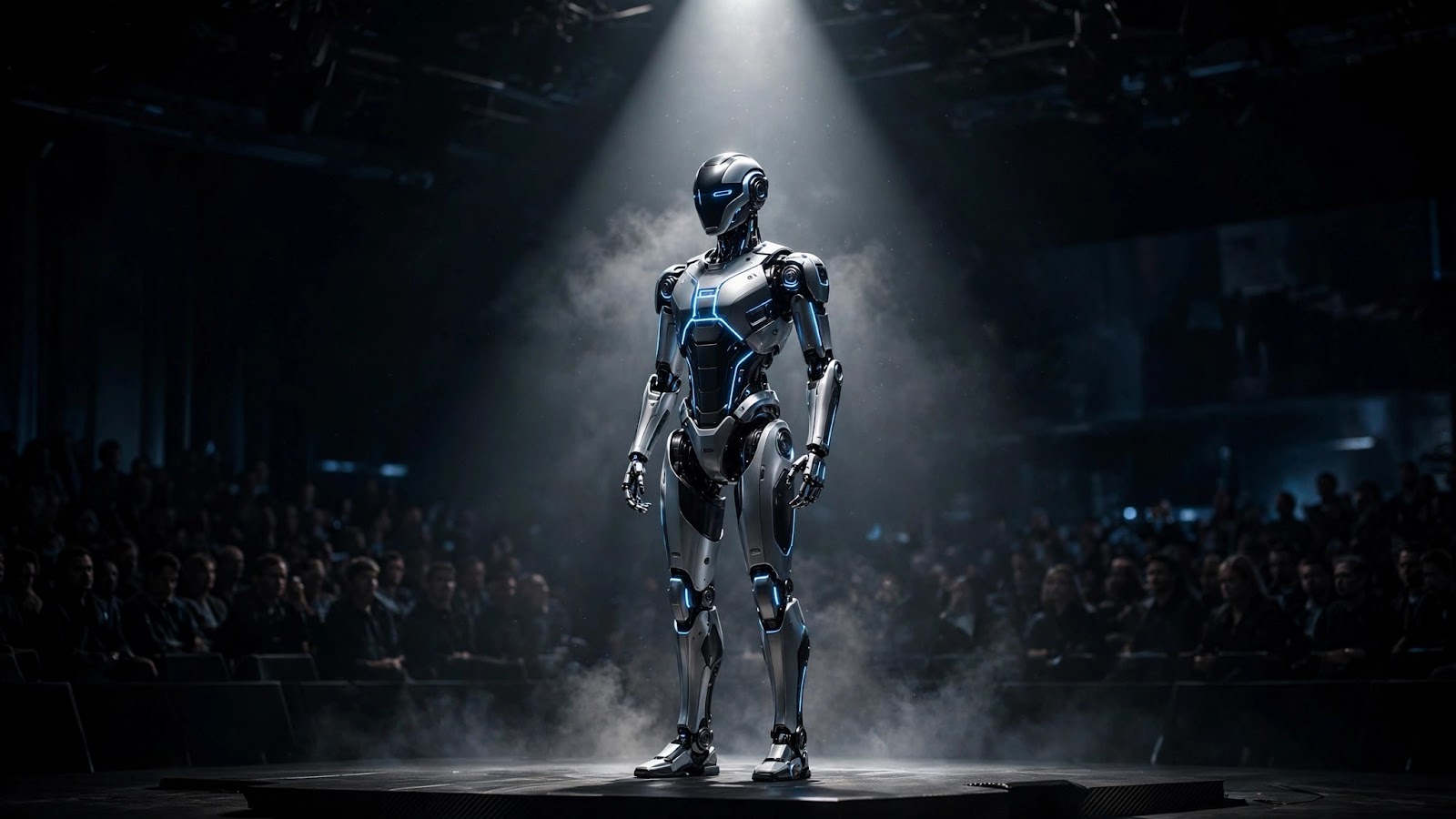
Faraday Future — the California EV company better known for its luxury FF 91 electric car — is stepping onto a very different stage this week. On October 14, 2026, Faraday Future Intelligent Electric Inc. (NASDAQ: FFAI) and its robotics arm FF EAI Robotics Ecosystem Inc. (NASDAQ: FFR) will hold a joint new product launch event built around four announcements in embodied AI robotics and "Physical AI" education.
The headliner: FF Nova, the company's first embodied-AI humanoid robot, unveiled through what the company calls an exclusive, invitation-only launch. It will be joined by FF Nova Mini, a smaller humanoid aimed at education; the EAI Education Ecosystem Brain and Curriculum Skills 2.0; and the FF Nova Developer Reinforcement Learning Platform, which opens early access to developers.
This article is a launch preview — the event hasn't happened yet. We'll walk through what's been announced, what "embodied AI" means in plain language, why Faraday Future is targeting schools and developers first, how Nova fits into the crowded 2026 humanoid robot race, and the open questions the company still needs to answer.
The Announcement: What's Happening and When
According to announcements made on October 12, 2026, the October 14 event will bring together FFR and FFAI for four launches centered on embodied AI robotics, Physical AI education, and developer enablement. The same day, Faraday Future founder and Global CEO YT Jia's weekly investor report has also been rescheduled to October 14, making this one of the busiest days on the company's calendar.
The in-person event is invitation-only. For everyone else, the full video will be published online at ff.com on October 15 at 5:00 p.m. PDT (that's 5:00 a.m. PKT on October 16 for viewers in Pakistan).
Alongside the launch, the company says it will co-host an AIAA seminar on frontier technology in engineering and academia at FFAI headquarters, with more than 50 scholars and professors from leading universities invited — an early signal that the academic and education community is central to this strategy.
The Four Launches, Explained
1. FF Nova — the company's first embodied-AI humanoid robot
FF Nova is the headline act: Faraday Future's first humanoid robot, and its entry into what the company now calls its "EAI" (embodied AI) robotics business. Crucially, Nova is not being positioned as a household robot or a factory worker — at least not yet. The company says it is designed for developers and educational institutions, and it is launching through an exclusive, invitation-only program.
That positioning matters. Instead of promising the world a robot that can fold your laundry, Faraday Future is putting Nova in the hands of the people most likely to figure out what it's actually good for: researchers, developers, and classrooms.
What we don't know yet: height, weight, sensors, onboard computing, battery life, or price — none of those details have been shared ahead of the event. If you see Nova specifications quoted elsewhere, treat them as speculation until the October 14 reveal.
2. FF Nova Mini — a humanoid robot for foundational "Physical AI" education
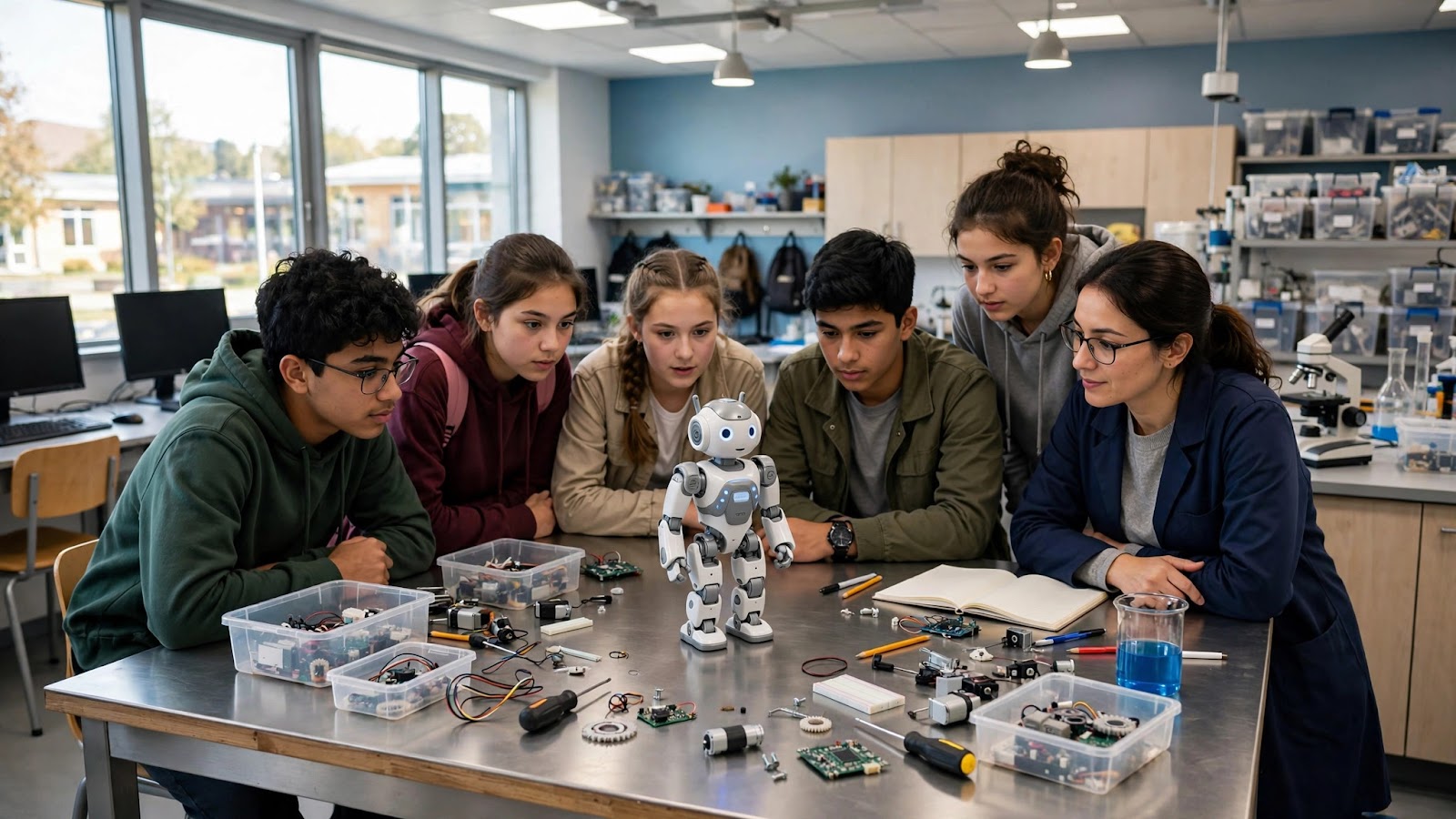
Alongside the flagship, the company will introduce FF Nova Mini, a smaller humanoid robot designed for foundational Physical AI education. This is the classroom play: a smaller, presumably more affordable robot that schools can use to teach students the basics of AI interacting with the physical world.
The distinction between Nova and Nova Mini mirrors a pattern seen elsewhere in robotics: a full-size developer platform plus a smaller classroom-friendly sibling, giving students and developers a shared ecosystem to grow into.
3. EAI Education Ecosystem Brain and Curriculum Skills 2.0
Hardware is only half the story. Faraday Future will also unveil the EAI Education Ecosystem Brain together with Curriculum Skills 2.0 — which reads as the software and curriculum layer sitting on top of the robots.
The "Education Ecosystem Brain" appears to be the shared AI platform connecting the robots, lessons, and developers, while "Curriculum Skills 2.0" suggests a new version of structured learning modules — the lessons, exercises, and skill packages that turn a robot into a teaching tool rather than an expensive paperweight. The "2.0" naming implies the company has been building education software for some time and is now formalizing it as part of the launch.
4. FF Nova Developer Reinforcement Learning Platform — with early access
The fourth launch is arguably the most important for the robotics community: the FF Nova Developer Reinforcement Learning Platform, opening exclusive early access to the developer community.
Reinforcement learning (RL) is one of the key techniques behind modern robot control — it's how robots learn to walk, grasp, and balance through trial and error in simulation before trying in the real world. A dedicated RL platform signals that Faraday Future wants developers to train new skills for Nova rather than waiting for the company to ship every capability itself. That developer-first approach only works if the tools are good, the documentation is real, and the community actually shows up — all things worth watching after the event.
For developers eyeing this platform, the local hardware matters too: serious robotics development needs serious AI compute, much like the new wave of AI-capable machines hitting the market — including Microsoft and NVIDIA's $2,599 AI laptop aimed at exactly this kind of work.
What "Embodied AI" Actually Means
You'll hear the phrase "embodied AI" a lot around this launch. Here's the plain-language version:
Most AI you've used lives behind a screen — it writes text, answers questions, generates images. Embodied AI is AI that has a body and acts in the physical world. A humanoid robot is the most ambitious version of that idea: an AI that can see its environment, understand spoken instructions, plan movements, and manipulate objects with its hands.
"Physical AI" is Faraday Future's preferred term for the same idea, and it tells you where the company thinks the value lies: AI that doesn't just think, but does.
Why does this matter for schools? Because a physical robot is a powerful teaching tool. Students who can watch a robot fail at a task, adjust its training, and then watch it succeed are learning AI, physics, programming, and problem-solving all at once. That's the bet behind the Nova Mini and the education ecosystem.
The Education Play: Why Schools and Developers First
Faraday Future's go-to-market choice — developers and educational institutions, not consumers or factories — is actually a smart read of where humanoid robots are in 2026.
The consumer humanoid dream (a robot butler in every home) is still years away from being reliable, safe, and affordable. The factory play (robots on assembly lines) is real but demands proven reliability at scale, and it's already crowded. The education and developer market, by contrast, has three advantages:
- Forgiving users. Students and researchers expect to tinker. A robot that needs tweaking is a feature in a classroom, not a bug.
- A built-in community. Every school using Nova Mini and every developer on the RL platform becomes a potential contributor — writing skills, sharing curricula, and training models.
- A talent pipeline. Students who learn Physical AI on Faraday Future's platform today become the robotics engineers of tomorrow — engineers who already know FF's tools.
The invitation-only Nova launch and the AIAA academic seminar with 50+ scholars fit the same strategy: seed the ecosystem with credible academic and developer partners first, then scale.

The Competition: A Crowded Race in 2026
FF Nova isn't entering an empty field. 2026 has become one of the most competitive years yet for humanoid robots:
- Tesla Optimus remains the highest-profile program, with Tesla demoing progressively more capable prototypes and talking up factory and eventually household use.
- Figure (Figure AI) has been pushing its humanoid robots toward real industrial pilots, including work with automakers, positioning itself as the serious enterprise contender.
- Unitree has taken a different path — selling relatively affordable humanoid robots like the G1 directly to developers and researchers, betting on volume and community adoption.
Faraday Future's angle is distinct: rather than leading with factories (Tesla, Figure) or consumer-friendly pricing (Unitree), it's leading with education and a developer platform. The open question is whether that niche is big enough to sustain a business — or whether it's a smart first step before a broader push.
Under the hood, every one of these robots depends on advances in AI chips and edge computing — including new chips like GlobalFoundries' FDX fusion lineup built for the AI era, which is quietly powering what humanoids can do on board rather than in the cloud.
Open Questions the Event Must Answer
For all the announcement's scope, the most important questions unanswered — which is normal for a pre-launch, but worth keeping a checklist:
- What can Nova actually do? Will the event show live demos — walking, grasping, following instructions — or carefully edited video? Live demos are the real test.
- What are the specs? Height, weight, sensors, onboard compute, battery life — none shared so far.
- What's the price, and who's invited? An "invitation-only" launch means most people can't buy one yet. When does that change, and at what cost?
- How real is the developer platform? An RL platform is only as good as its SDK, documentation, and simulation tools. Early access will be judged on substance.
- How does this fit Faraday Future's EV business? Investors will want to know how robotics complements — rather than distracts from — the automotive side.
Outlook: Why This Launch Matters
Whatever you think of Faraday Future's long and turbulent history, the October 14 event is a genuine milestone in the humanoid robot story: a new entrant choosing education and developers as its beachhead, launching not one but two robots plus a software ecosystem in a single day.
If the demos are real, the platform is solid, and schools actually adopt it, FF Nova could become the platform a generation of students first meets Physical AI on. If the event is mostly promises and renders, it joins a long line of robotics launches that arrived too early.
We'll know more when the full video streams on October 15 at 5:00 p.m. PDT on ff.com. Until then, keep the checklist above handy — and watch what the robots actually do, not just what the press release says.